
Craft
Stitched vs Printed: Why Tackle Twill Matters on an NBA Jersey
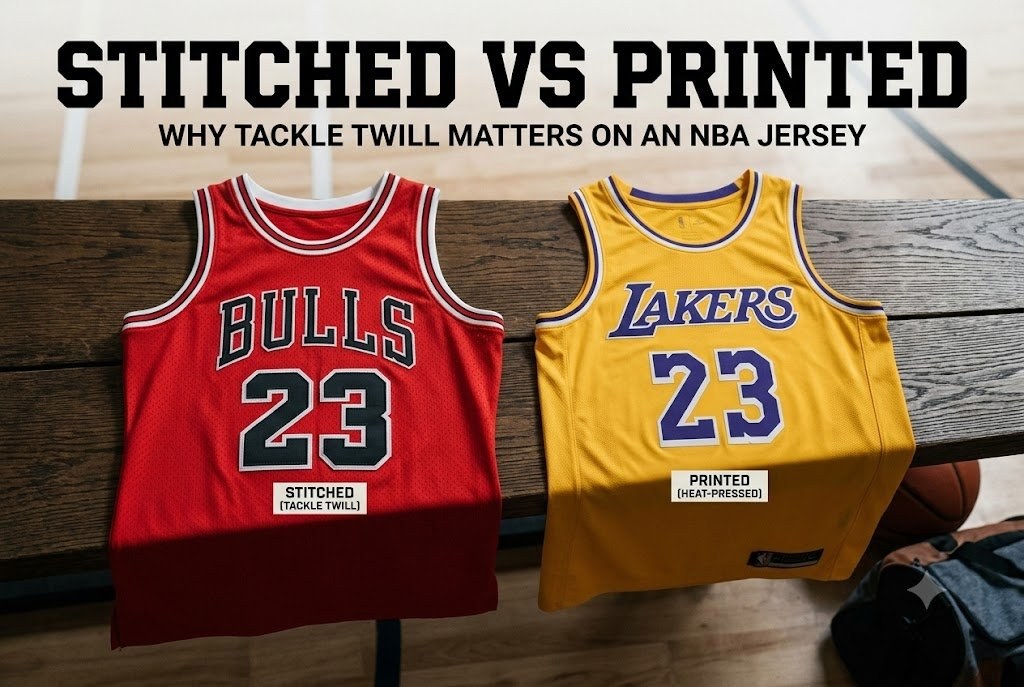
<b>Stitched tackle twill</b> means the numbers and letters are cut from fabric, layered where a design needs more than one colour, and sewn onto the jersey. Printed graphics sit on the surface and are the first thing to crack, fade and peel. Stitched lasts longer and survives washing.
- Stitched twill - letters cut from fabric, layered, then sewn on.
- Printed - graphics applied to the surface of the fabric.
- Stitched work resists washing, wear and heat far better.
- Our jerseys use stitched tackle twill for names, numbers and lettering.
What tackle twill actually is
Tackle twill is the fabric used for jersey lettering. The letters and numbers are cut from twill, layered where a design needs more than one colour, and then sewn onto the garment. The result has real thickness - you can feel the edge of a number with your fingertips.
This construction is the same whether you buy an Authentic, Swingman or Replica build.
Stitched vs printed: the comparison table
| <b>Stitched tackle twill</b> | <b>Printed</b> | |
|---|---|---|
| Construction | Cut from fabric, layered, sewn on | Applied to the fabric surface |
| Feel | Raised edges, visible stitch line | Flat to the touch |
| Wash durability | No adhesive layer to break down | Cracks under heat, fades, peels at edges |
| Multi-colour numbers | Separate fabric pieces layered | One flat print |
| Sheen | Fabric sheen that shifts with the light | Uniformly flat |
| Expected lifespan | Outlasts the garment with basic care | First thing to fail |
Why stitching survives the wash
- Heat and agitation are what kill printed graphics. A stitched number has no adhesive layer to break down, so the usual failure modes simply do not apply.
- Wash cold, turn the jersey inside out, use mild detergent and avoid high heat - that is the whole routine.
- Never iron directly on the twill; heat is the one thing that will still damage it.
How to tell stitched from printed in a photo
- Look at the edges. Stitched letters have a defined border and a visible stitch line; printed ones look painted on.
- Look for sheen. Twill has a fabric sheen that changes with the light. Print is uniformly flat.
- Zoom on a multi-colour number. Layered twill shows separate fabric pieces; a print shows one layer.
Where stitching matters most
On the back - the name and number are the largest graphics on the jersey and the ones everyone sees. It also matters on a custom piece: if you are putting your own name on a jersey, you want it sewn on, not printed on.
Read the custom jersey guide before you order.
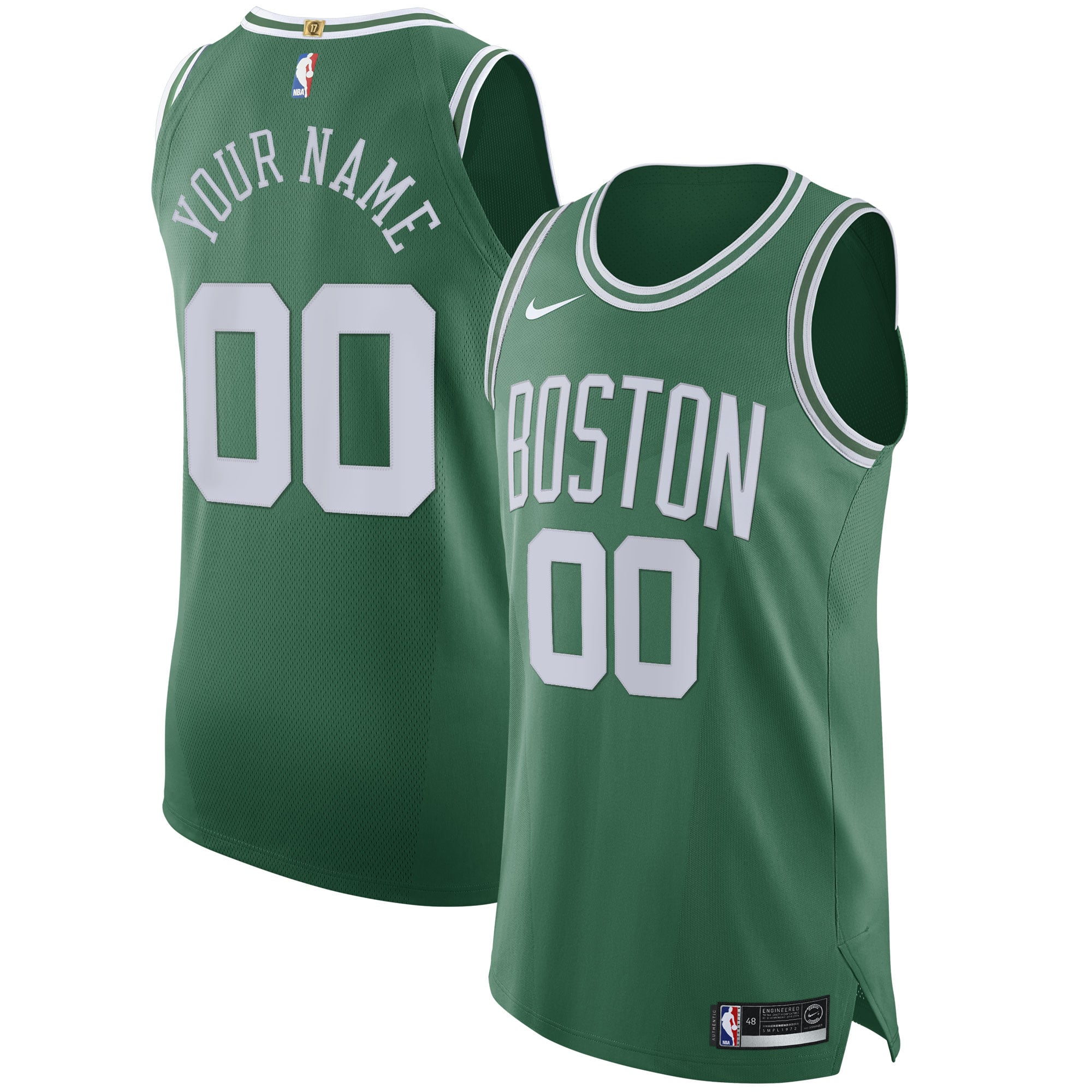 Boston CelticsMen's Boston Celtics Green 2020/21 Authentic Custom Jersey - Icon Stitched tackle twill - ships worldwideView this jersey
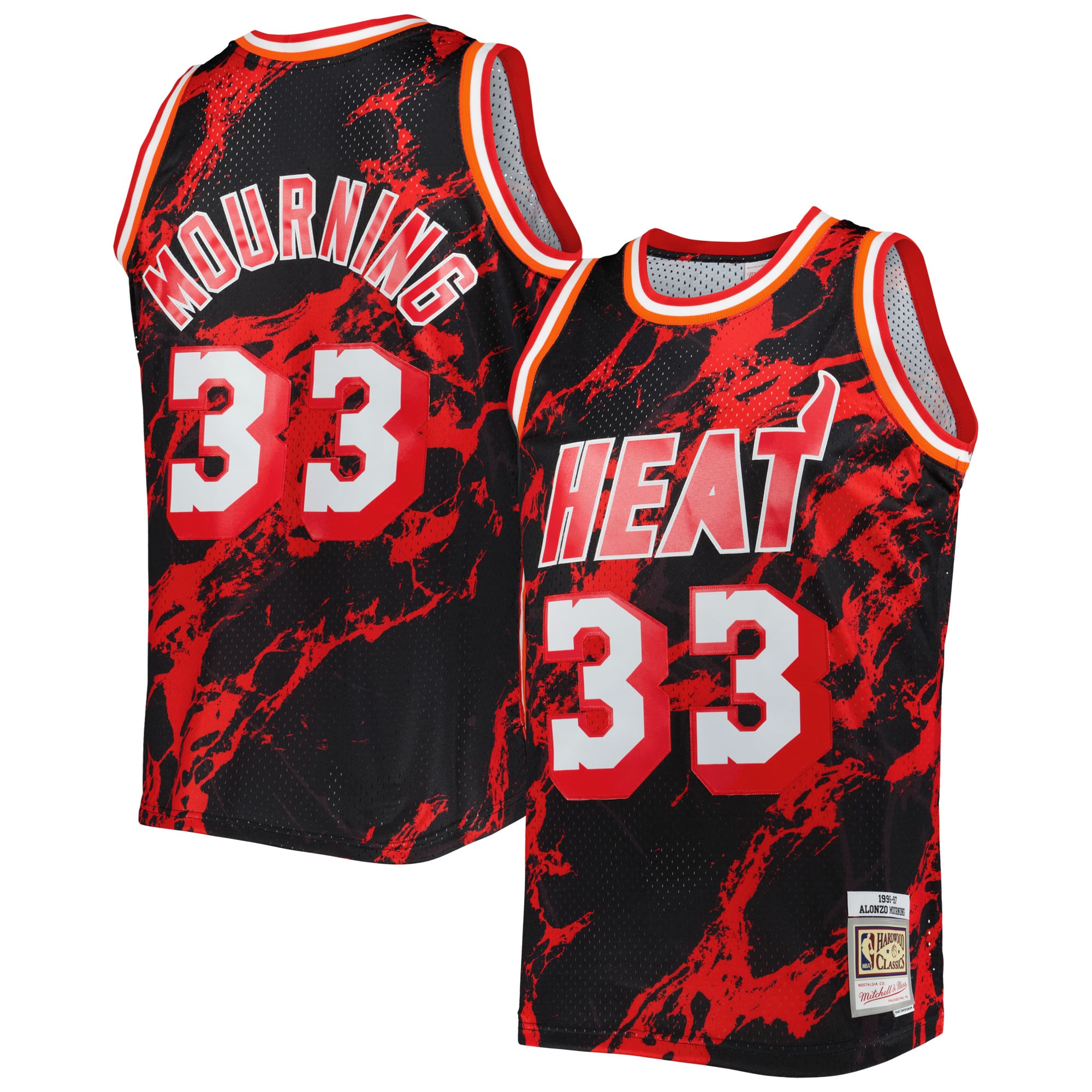 Miami HeatMen's Miami Heat Alonzo Mourning Black 1996/97 Hardwood Classics MStitched tackle twill - ships worldwideView this jersey
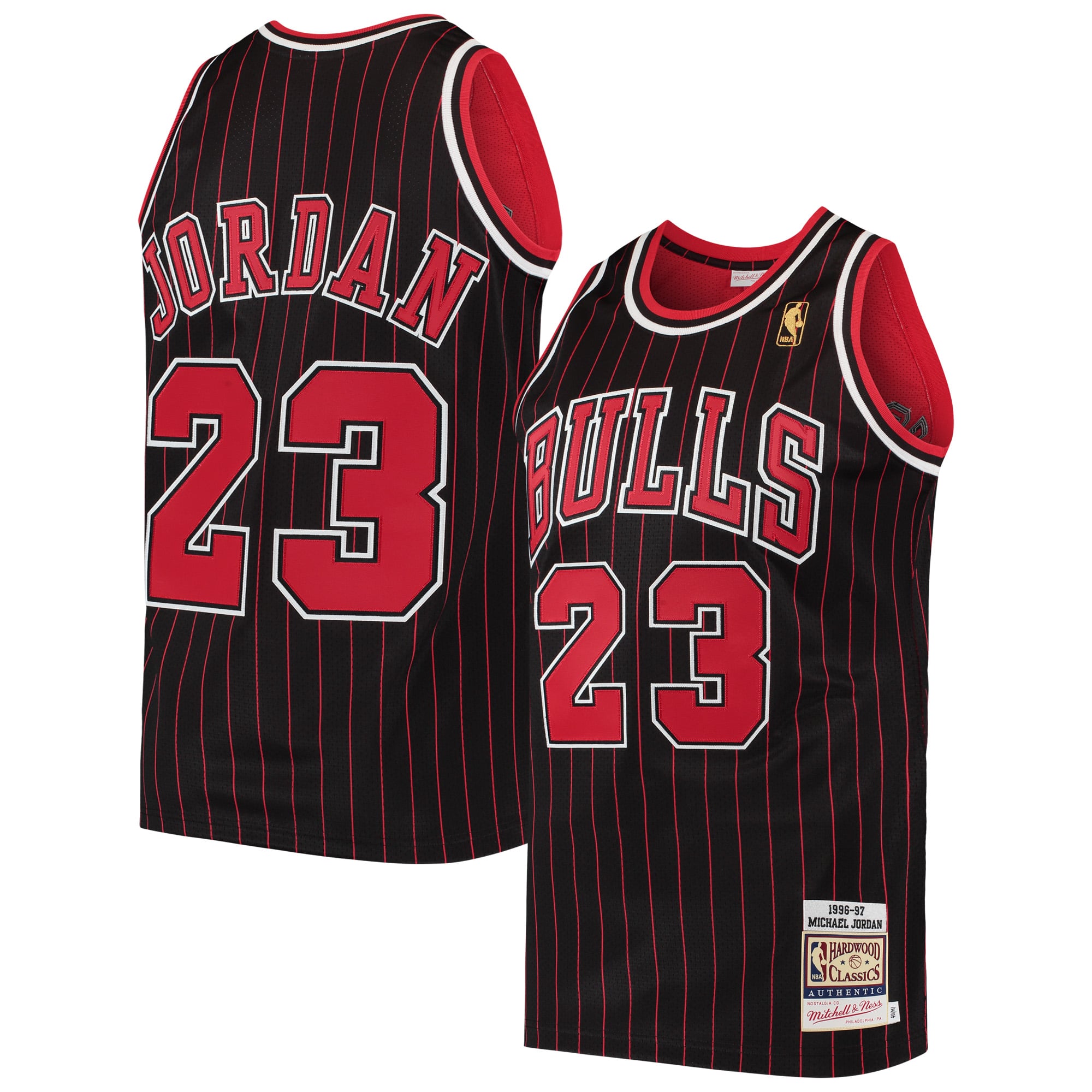 Chicago BullsMen's Chicago Bulls Michael Jordan Black 1996/97 Hardwood ClassicsStitched tackle twill - ships worldwideView this jersey
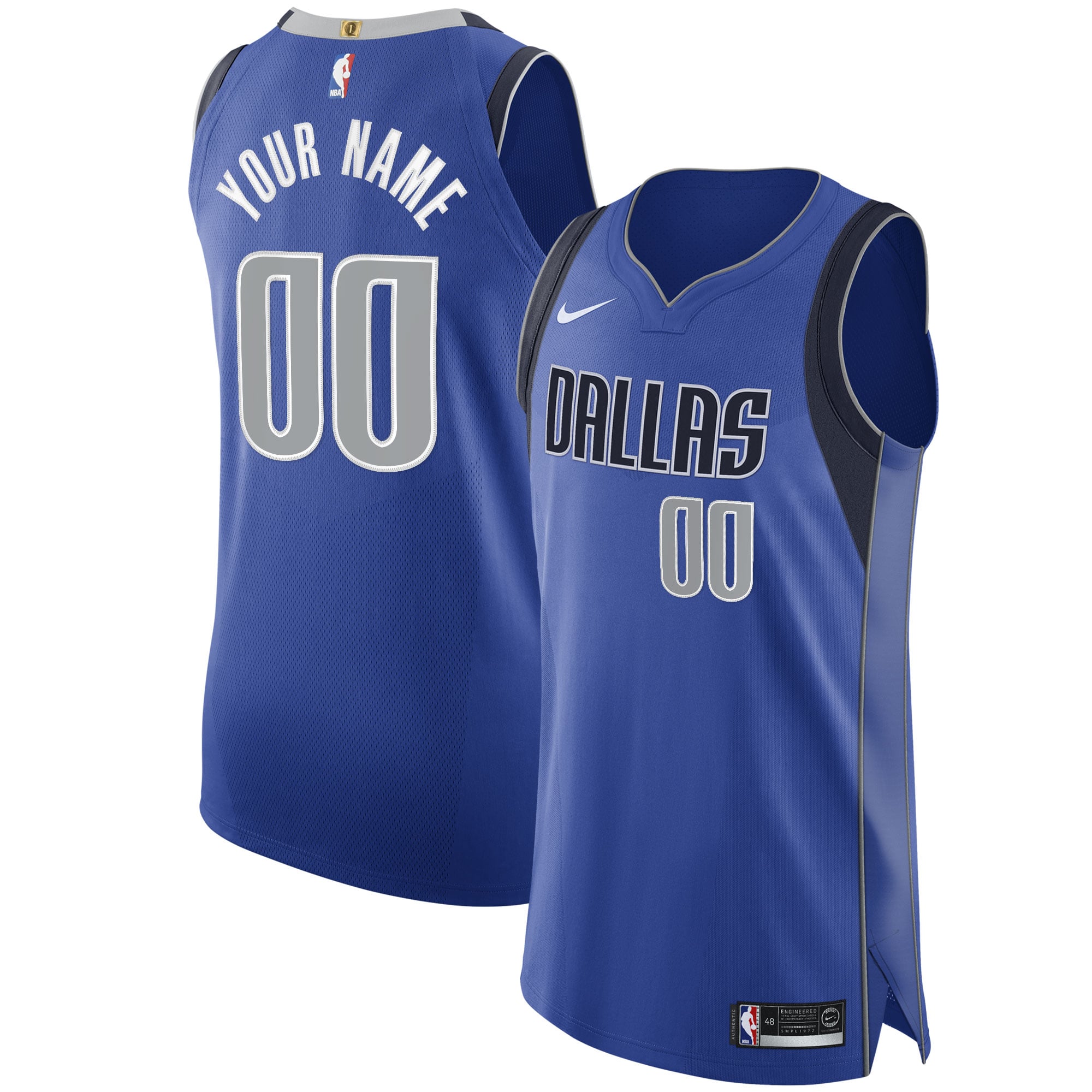 Dallas MavericksMen's Dallas Mavericks Royal 2020/21 Authentic Custom Jersey - IcoStitched tackle twill - ships worldwideView this jersey
Every jersey in our range uses stitched tackle twill - pick your team and edition.
Shop stitched NBA jerseysSources: Tackle twill
Frequently asked questions
Are all your jerseys stitched?
Our jerseys use stitched tackle twill for names, numbers and lettering - no surface printing on those elements, whichever build you choose.
Does stitched twill fade?
Far more slowly than print. Wash cold, inside out, and avoid high heat and it will hold its colour for years.
Is a stitched jersey heavier?
Marginally - layered twill adds a little weight. Most people read that as a quality signal rather than a downside.
Can I put my own name on a stitched jersey?
Yes. Custom jerseys are personalised with your own name and number using the same stitched twill. See the custom jersey guide.
How do I wash a stitched jersey?
Cold wash, inside out, mild detergent, no high heat. Never iron directly on the twill.