
Buying guide
How to Spot a Fake NBA Jersey: A Real vs Fake Checklist
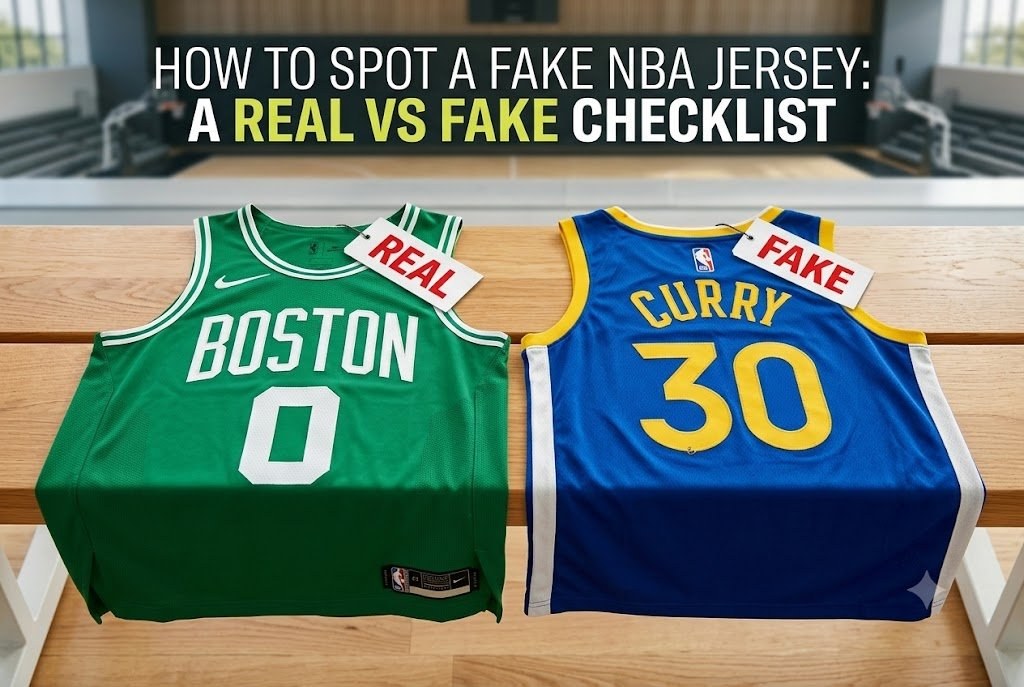
Check the lettering first: fakes almost always print where the real thing stitches. Then check the jock tag, the collar, the stitching quality, the fabric, the price and the seller. Two or more red flags together mean walk away.
- Lettering: stitched twill, not flat print.
- Jock tag: clean, correctly positioned, correctly sized.
- Stitching: even, tight, no loose threads.
- Fabric: substantial, not thin and shiny.
- Price: far below market is a warning, not a bargain.
- Seller: published policies you can actually use.
Start with the lettering
Lettering is the fastest tell. Jersey lettering is cut from tackle twill and sewn on, so it has thickness and a visible stitch line. Counterfeits nearly always print it flat to save cost. Run a finger across a number: if you feel nothing, be suspicious.
More on why this matters: stitched vs printed.
The real vs fake signal table
| Check | <b>What you want to see</b> | <b>Red flag</b> |
|---|---|---|
| Lettering | Raised twill with a visible stitch line | Flat, painted-on print |
| Jock tag | Clean, correctly sized, correctly placed | Blurry text, wrong size or position |
| Seams | Even, tight stitching | Uneven spacing, loose threads, glued seams |
| Fabric | Substantial athletic mesh | Thin, shiny, slick to the touch |
| Price | In line with the market | Far below every comparable seller |
| Seller | Published shipping and returns policies | No policies, no answers to direct questions |
Check the jock tag
The jock tag at the bottom left of the front hem is a common weak point on fakes: wrong size, wrong position, blurry text or an oddly placed logo. Compare it against product photos of the same edition from a seller you trust.
Inspect the stitching and seams
Look along the collar, the armholes and the side seams. Even, tight stitching with no loose threads is what you want. Uneven spacing, stray threads or glued rather than sewn seams are all bad signs.
Feel the fabric
- Counterfeit fabric is usually thinner and shinier than it should be, and often feels slick rather than like athletic mesh.
- If a jersey looks right in photos but feels cheap in the hand, trust the feel - photos hide fabric weight better than anything else.
- A genuine jersey has a real cost floor. A price far below market is the single most reliable warning sign.
Be realistic about price
A genuine jersey has a real cost floor. A listed price far below the market is not a bargain - it is the most reliable single indicator that something is wrong.
Buy from a seller with real policies
The safest move is not spotting fakes - it is buying somewhere with published shipping and returns policies you can actually use. We ship worldwide with free shipping over $69 and 30-day returns, and every jersey we sell uses stitched tackle twill.
Read our shipping policy · Read our returns policy
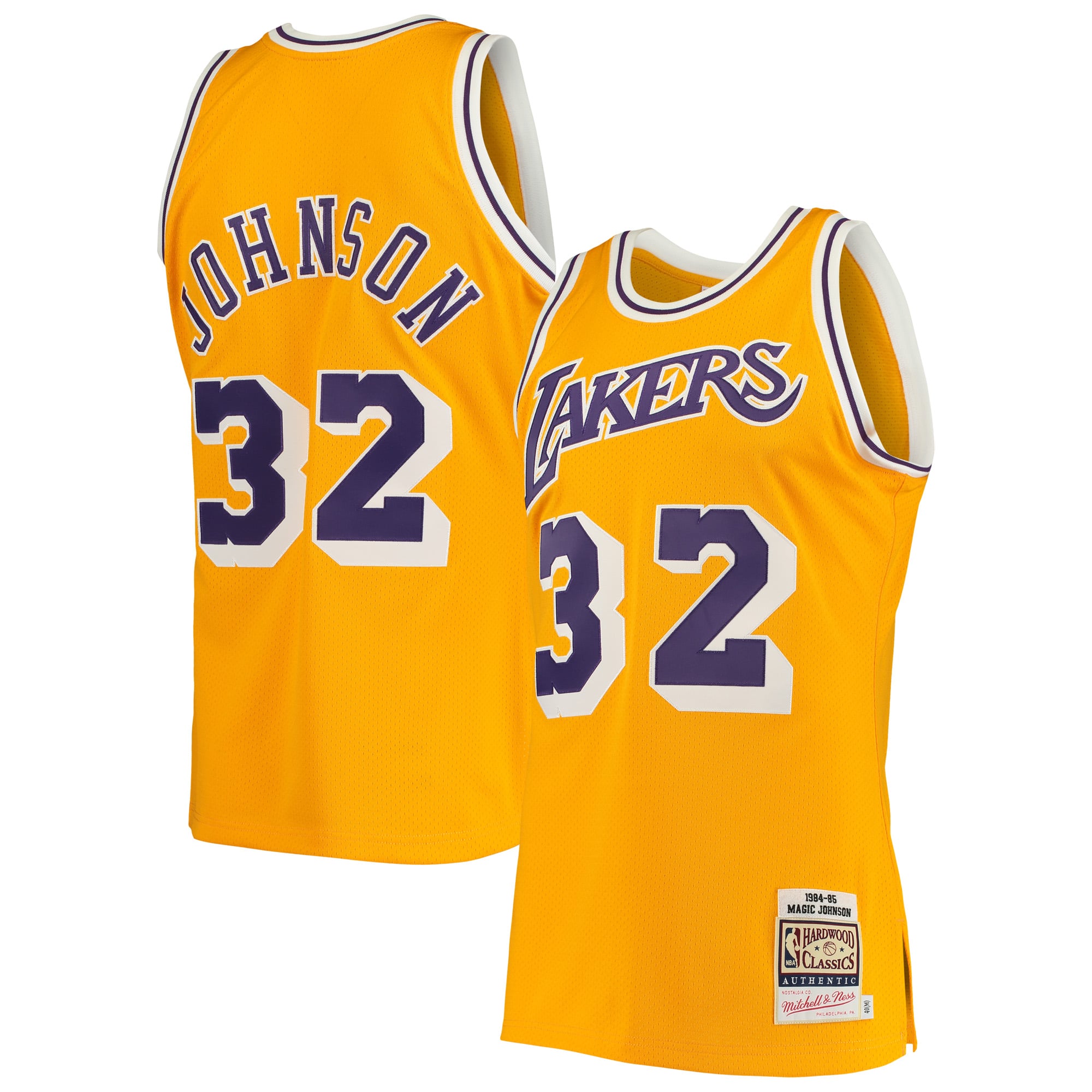 Los Angeles LakersMen's Los Angeles Lakers Magic Johnson Gold 1984/85 Hardwood ClassStitched tackle twill - ships worldwideView this jersey
 New York KnicksMen's New York Knicks Carmelo Anthony Blue 2010/11 Swingman JerseyStitched tackle twill - ships worldwideView this jersey
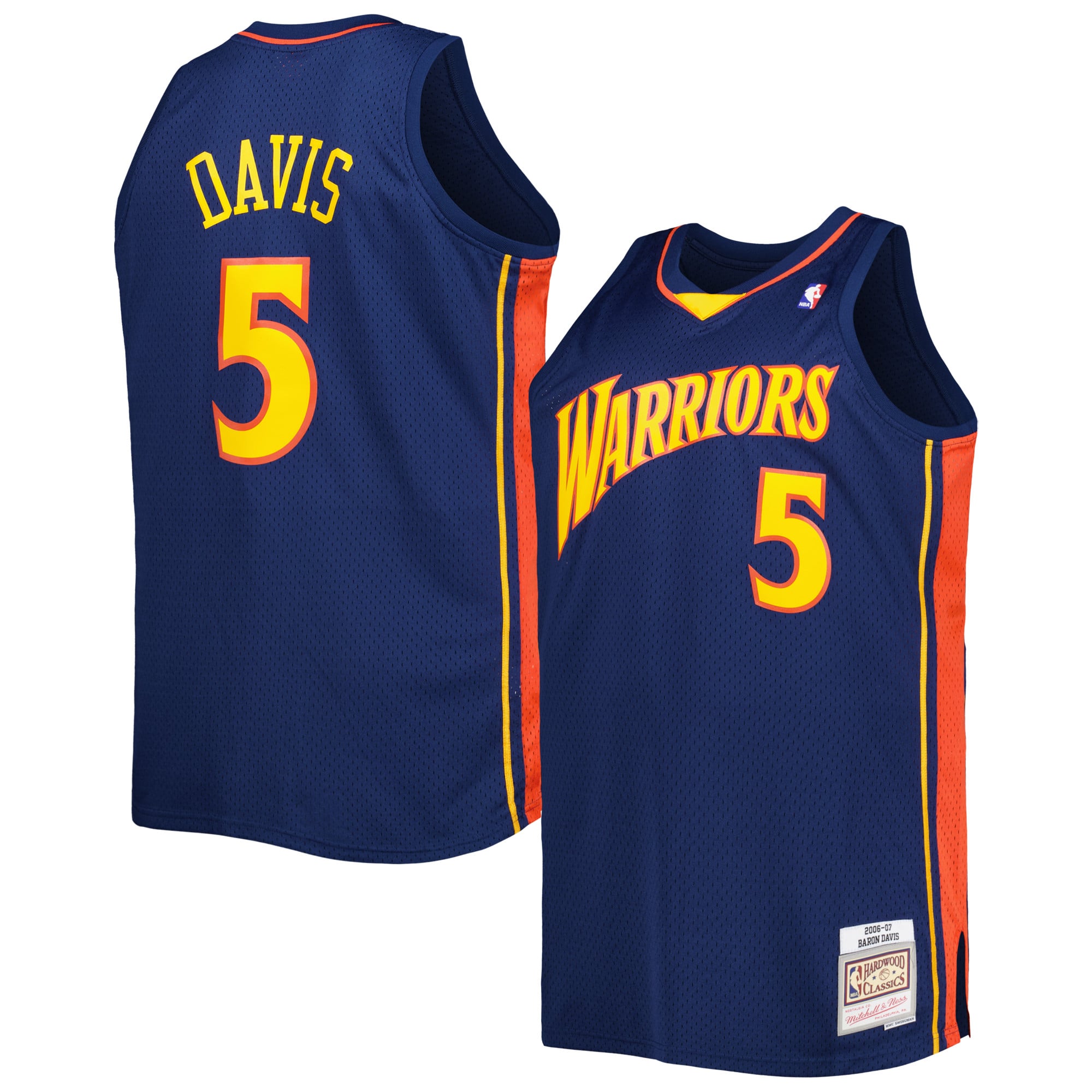 Golden State WarriorsMen's Golden State Warriors Baron Davis Navy Big & Tall Hardwood CStitched tackle twill - ships worldwideView this jersey
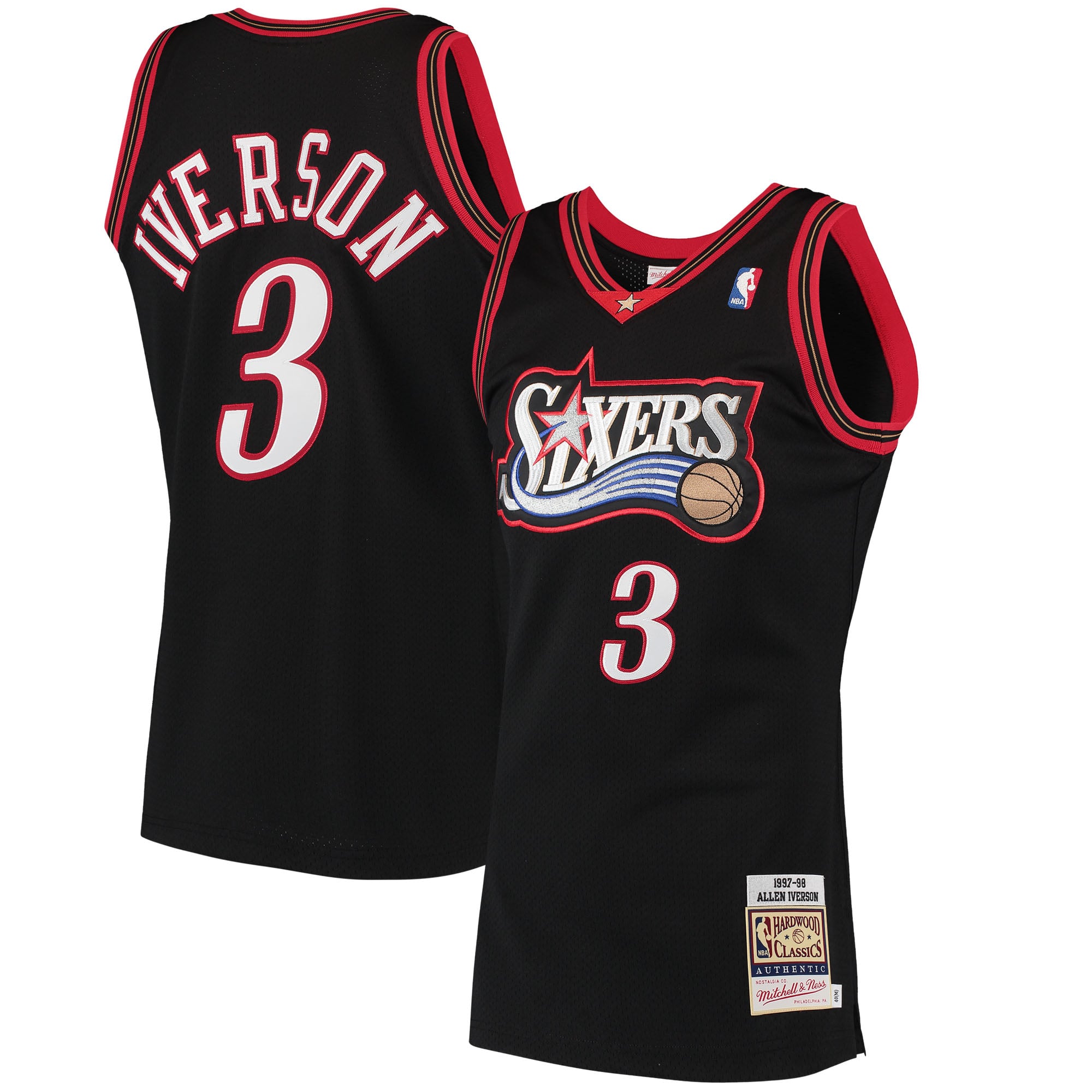 Philadelphia 76ersMen's Philadelphia 76ers Allen Iverson Black 1997/98 Hardwood ClasStitched tackle twill - ships worldwideView this jersey
Stitched tackle twill as standard, free worldwide shipping over $69, 30-day returns.
Shop genuine-spec jerseysSources: Counterfeit consumer goods
Frequently asked questions
What is the single biggest tell?
The lettering. If the numbers and name are printed flat instead of cut from twill and sewn on, treat that as decisive.
Are all cheap jerseys fake?
Not automatically - but a price far below market is the strongest single warning sign. Compare across sellers before assuming you found a bargain.
Do fakes ever get the stitching right?
Rarely, and usually not consistently. That is why you check several things together rather than one.
Is it safe to buy from a marketplace seller?
Only if they publish real policies and answer questions directly. A seller who cannot tell you how the lettering is applied is telling you something.
What should I do if I think I bought a fake?
Contact the seller first and ask them to confirm the construction in writing. If they will not, use the payment provider's dispute process.